


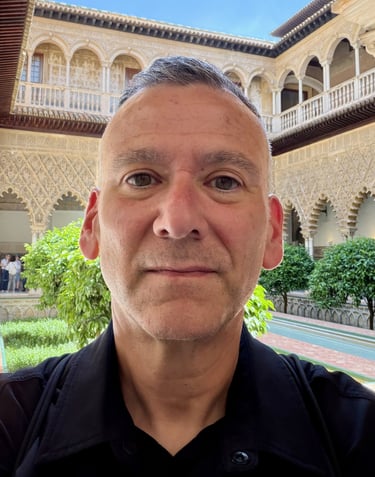
MEDIEVAL AND EARLY MODERN HISTORIAN |
PUBLIC HUMANIST |
HUMANISTIC AI RESEARCHER
I combine archival scholarship, AI-assisted manuscript study, immersive simulation, and public participation to investigate medieval Iberia and the early Americas—and to determine how artificial intelligence can serve the humanities responsibly.
I am a historian, digital humanist, and public scholar working at the intersection of archives, artificial intelligence, and public learning. My research examines the interconnected histories of Christians, Jews, Muslims, and religious converts in medieval and early modern Iberia and the Americas, with particular attention to Sephardic and converso experiences, migration, identity, cultural exchange, and historical memory.
Artificial intelligence enters my work not as an "oracle", but as an instrument to question, test, and teach. I use human-directed language and multimodal models to assist with paleographic transcription, identify patterns across dispersed records, construct source-grounded visualizations, and create simulations in which students and public participants confront the choices and uncertainties faced by historical people. Just as importantly, I investigate where AI fails: hallucination, false certainty, cultural flattening, inherited bias, and its inability to experience fear, shame, hope, trauma, or moral responsibility.
These questions animate Deciphering Secrets: Iberian Scribe AI, an experimental application for reading Iberian manuscripts; Virtual Plasencia, Spain: The Medieval Vines of Three Faiths, an AI-supported historical simulation grounded in fifteenth-century records; the forthcoming Cambridge Element: The Immersive Global Middle Ages, coauthored with Lynn T. Ramey; and my article “Liminal Minds and Mechanical Mysteries,” which compares human and machine interpretations of Sephardic converso lives. They also shape my work with the Urraca AI framework and the BADDO Project, where historians, humanists, and technologists evaluate the possibilities, limitations, and ethical responsibilities of AI-assisted historical research.
The public interest is the governing principle of this work. AI should not merely produce faster answers. It should help more people encounter primary sources, learn how historical knowledge is constructed, recognize uncertainty, question computational authority, and participate in responsible interpretation. Humanistic AI should not only answer questions; it should teach us how to question its answers.
Through the Plus Ultra Collective, I bring together scholars, students, technologists, archivists, cultural organizations, and public learners to create historically rigorous and accessible forms of research. My purpose is to expand what artificial intelligence can contribute to the humanities while preserving what historical interpretation most urgently requires: context, ethical judgment, cultural understanding, and care for the human lives represented in the archive.










Collaborative and Core Efforts


Plus Ultra Collective
The Plus Ultra Collective combines humanistic studies and technology to deepen understanding of historical examples of intercultural interchange in the Americas, Iberia, and the Mediterranean World.

Immersive Global
Middle Ages
Deciphering Secrets:
Unlocking the Manuscripts
of Medieval Spain
Tne Immersive Global Middle Ages Institute advanced digital humanities, integrating immersive technology with traditional, global, multidisciplinary medieval studies.
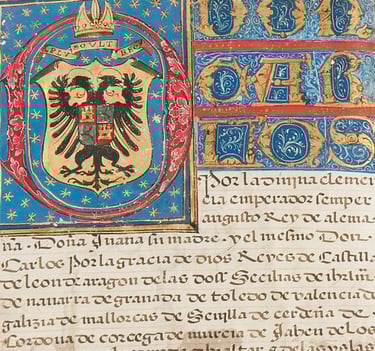
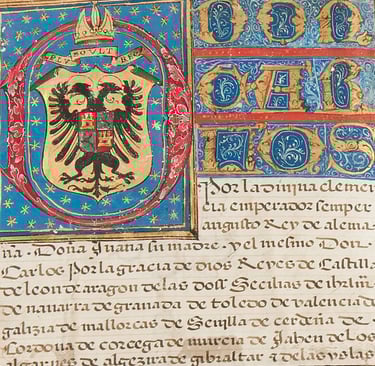
A collaborative citizen science project focused on revealing the inter-religious relations of Jews, Christians, Muslims, and religious converts in medieval Spain.
BADDO
Bringing AI to the Discovery of Historiographical Data to Overcome Traditional Barriers, a study to assess the extent to which human expertise influences the objectivity and accuracy of outcomes compared to AI-generated results.
The Queen Sofía
Spanish Institute: America&Spain250
The organizations and individuals behind this initiative are developing educational programs and cultural activities across United States in celebration of 250 years of the relationship between the USA, Spain, and the Spanish-speaking world.
Sephardic Ancestry
A collection of original scholarly writings, primary sources, and peer-reviewed research that illuminates the ancestry amd history of Sephardic Jews from Spain, Portugal, as well as their diasporic migrations after 1492.
Virtual Plasencia
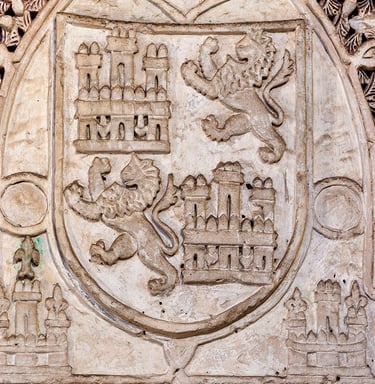
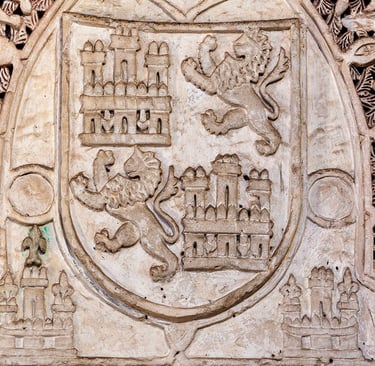
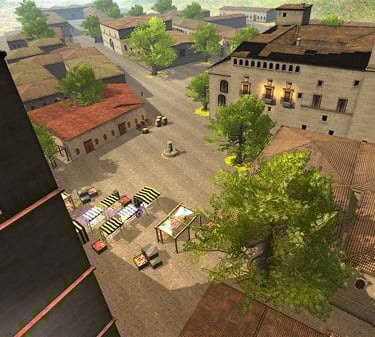
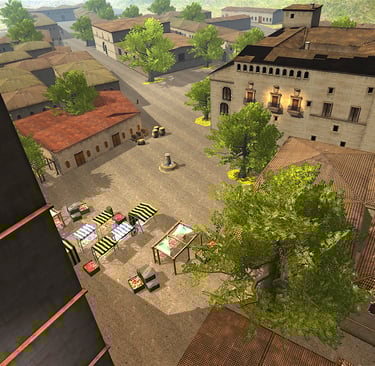
Virtual Plasencia is collaborative entity that is digitally recreating the virtual world of medieval Plasencia, Spain. Windows OS Virtual Plasencia App: Download here (200 Mb). Digital narrative on YouTube.com: View “La Mota”
La Reimaginación de la Edad Media Global:
Un enfoque de inteligencia artificial para explorar los intercambios culturales
Reimagining the Global Middle Ages: An Artificial Intelligence Approach to Exploring Cultural Exchanges



Expertise and Experience
Mentor students and colleagues in immersive, global storytelling — Co-directed the NEH-funded Immersive Global Middle Ages Institute (2021–23), guiding international teams to use VR/AR for experiential learning and digital research through projects like Virtual Plasencia.
Integrate teaching, research, and discovery through collaboration — Founder of Deciphering Secrets, a global citizen-science project training nearly 50,000 participants to transcribe medieval manuscripts, advance paleography, and expand open-access research collections.
Bridge scholarship and public understanding of identity — Author of Creating Conversos and co-curator of Fractured Faiths, connecting archival research on Sephardic and converso histories with contemporary explorations of heritage and belonging.
Lead ethical innovation in AI-assisted scholarship — Advise the BADDO Project (UC3M), developing explainable AI for historical interpretation and mentoring students in data ethics, digital methods, and humanistic research design.
Conduct global fieldwork and interdisciplinary inquiry — Research across 40+ archives in Spain, Portugal, the Vatican, Mexico, Bolivia, and the U.S., linking manuscripts and material culture to museums, educators, and the public.
Build inclusive, international learning communities — Founder of the Plus Ultra Collective, mentoring emerging scholars and coordinating collaborations among universities, cultural institutions, and creative technologists worldwide.
Advance global education through leadership and research excellence — Marie Curie Fellow (UC3M) and Professor of History at the University of Colorado, developing programs supported by U.S. and European funders that integrate research, pedagogy, and public engagement.

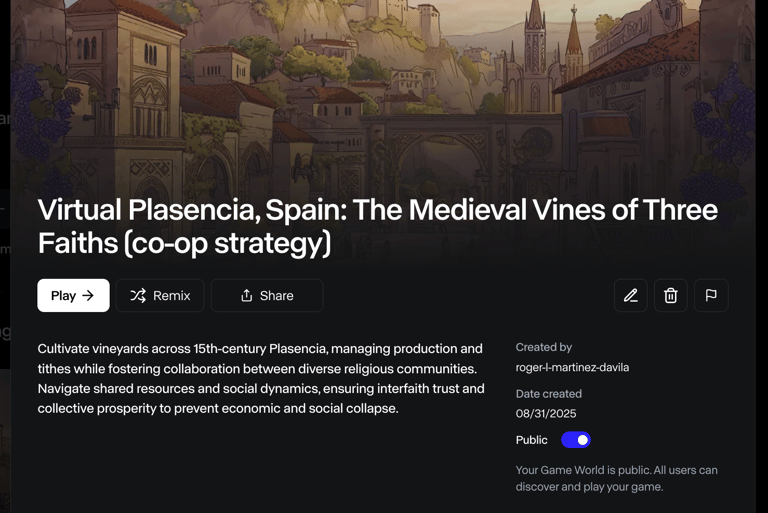
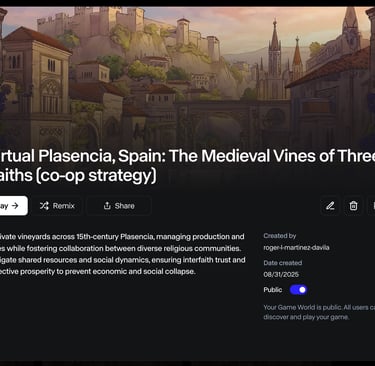
Virtual Plasencia, Spain:
The Medieval Vines of Three Faiths
(A cooperative strategy game)
Cultivate vineyards across 15th-century Plasencia, managing production and tithes while fostering collaboration between diverse religious communities. Navigate shared resources and social dynamics, ensuring interfaith trust and collective prosperity to prevent economic and social collapse (A Runway Game World)
Let's connect
I look forward to hearing from you.